To Christ our Lord
I caught this morning morning’s minion, king-
dom of daylight’s dauphin, dapple-dawn-drawn Falcon, in his riding
Of the rolling level underneath him steady air, and striding
High there, how he rung upon the rein of a wimpling wing
In his ecstasy! then off, off forth on swing,
As a skate’s heel sweeps smooth on a bow-bend: the hurl and gliding
Rebuffed the big wind. My heart in hiding
Stirred for a bird,—the achieve of, the mastery of the thing!Brute beauty and valour and act, oh, air, pride, plume, here
Buckle! AND the fire that breaks from thee then, a billion
Times told lovelier, more dangerous, O my chevalier!No wonder of it: shéer plód makes plough down sillion
Shine, and blue-bleak embers, ah my dear,
Fall, gall themselves, and gash gold-vermilion.
running list of links RSS
-
-
Shortlisted: Max Pattenden, James Clifford Kent, Marcie Docherty, and Katie Hitchcock-Smith.
-
Daron Acemoglu, on X: “I am not happy about the Economist’s article, which feels like a hit piece. There is also a background to it, which is more troubling (as I will share at some point). I asked them to allow me to respond.”
See previously: Book Review: What Happened to Liberal Democracy? by Daron Acemoglu
-
Posting this for the history, not the argument.
-
The second of Morgan Meis’ Three Paintings Trilogy, on Franz Marc.
See previously: Drunken Silenus
-
See also: The Great Feminization
-
This was why I moved to Edge, maybe time to go back to Chrome
-
I always new the amount of ice Starbucks serves is bogus
-
Angelo Carusone, president of Media Matters for America, on Candace Owens: “She can create a story line and then push it.”
-
George Scialabba: “These people deserve chickenshit jobs.”
-
Randomly receiving sobriety incentives significantly reduced daytime drinking while leaving overall drinking unchanged.
See also: Can financial incentives help heavy drinkers stay sober?
-
In a more long-term perspective, the reform is unlikely to put an end to Italy’s endless tinkering with electoral laws: passed as ordinary legislation, it could be easily amended by simple majority by any future government (simple majorities that the system itself all but guarantees). Moreover, questions around constitutional validity hang over the text. Italy’s two previous experiments with majority bonuses in the 2005 and 2015 reforms did not end well: the Constitutional Court struck down key provisions of both laws in 2014 and 2017 (although in the latter case, the Court also allowed that majority bonuses are admissible within limits). Critics also add that pre-designating a Prime Minister smuggles in a fundamental change to the parliamentary form of government (which would require a constitutional amendment) and that the national-level majority bonus in the Senate runs afoul of the constitutional requirement that senators be elected on a regional basis.
-
-
The challenge for African governments is not to replace one form of dependence with another. It must use foreign investment to expand domestic capacity, building up local manufacturing and strengthening regional power networks. Sub-Saharan Africa is already the world’s leading market for pay-as-you-go-solar. If its transition is managed well, it could soon lead the clean energy transition in many more ways than that.
-
Background: Luuk van Middelaar
-
“From blossoms comes / this brown paper bag of peaches”
-
-
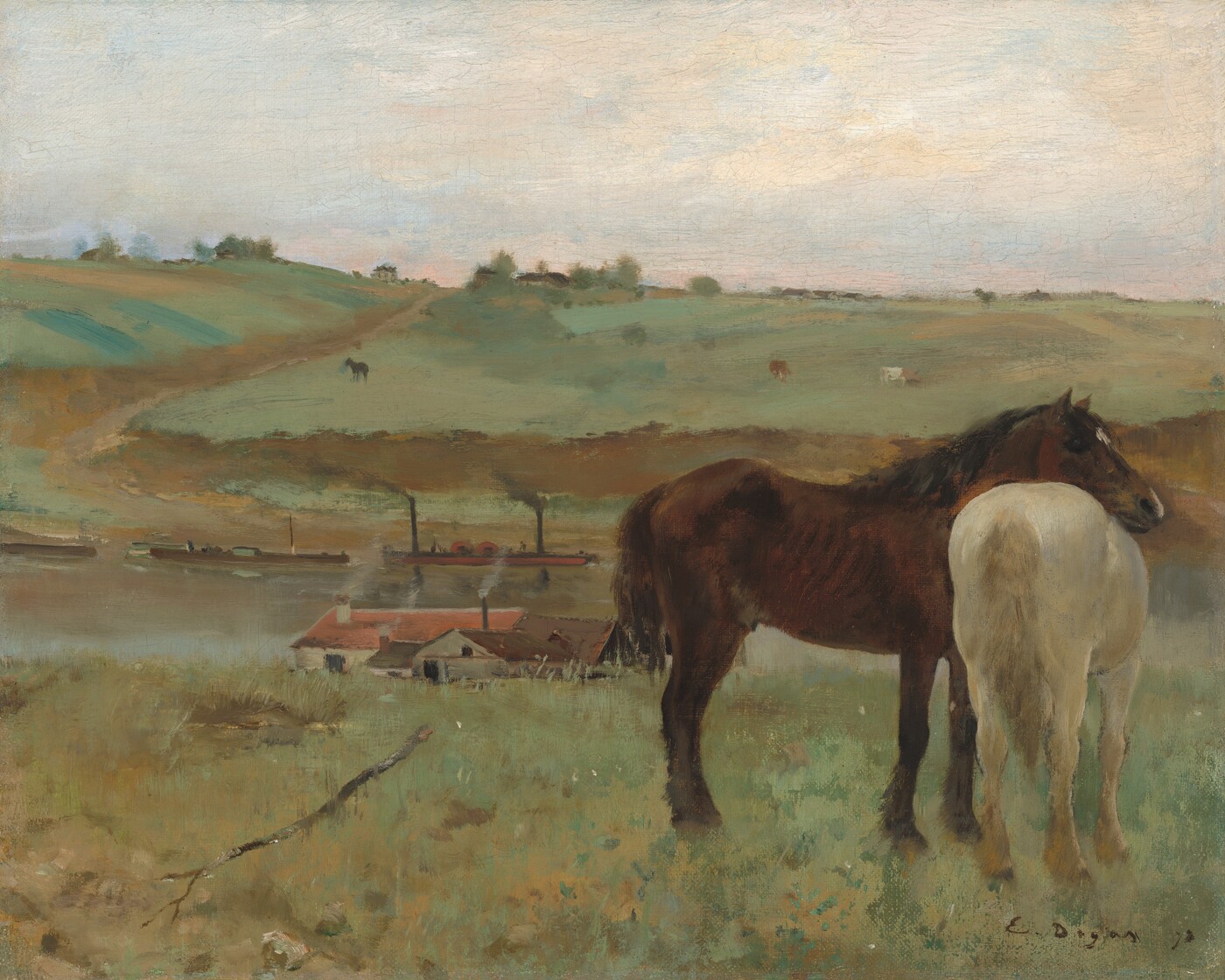
The world is charged with the grandeur of God.
It will flame out, like shining from shook foil;
It gathers to a greatness, like the ooze of oil
Crushed. Why do men then now not reck his rod?
Generations have trod, have trod, have trod;
And all is seared with trade; bleared, smeared with toil;
And wears man’s smudge and shares man’s smell: the soil
Is bare now, nor can foot feel, being shod.And for all this, nature is never spent;
There lives the dearest freshness deep down things;
And though the last lights off the black West went
Oh, morning, at the brown brink eastward, springs —
Because the Holy Ghost over the bent
World broods with warm breast and with ah! bright wings. -
-
Background: Theodore Dalrymple
-
See previously: How a Band of Difficult Thinkers Shaped One Author and the World
“Theory’s legacy of vigilant questioning, of scrupulous attentiveness to language’s complexities and contradictions,” Eakin writes, “is not antithetical to the common good.” But how do we define the common good when the sources of a shared culture have been so severely eroded?
-
For nationalism to claim for itself the greatest of Irish anglophone writers won’t be palatable to some of its adversaries. What Callanan’s book shows, simply enough, is that one can hold that nations should be free to determine their own destiny without being either insular or supremacist, and that Joyce’s career is a case in point.
-
In Federalist no. 51, James Madison, himself an avid student of politics, observed that, “in framing a government which is to be administered by men over men, the great difficulty lies in this: you must first enable the government to control the governed; and in the next place oblige it to control itself.”
-
“Henry, there’s something I would like to tell you, for what it’s worth, something I wish I had been told years ago. You’ve been a consultant for a long time, and you’ve dealt a great deal with top secret information. But you’re about to receive a whole slew of special clearances, maybe fifteen or twenty of them, that are higher than top secret.
“I’ve had a number of these myself, and I’ve known other people who have just acquired them, and I have a pretty good sense of what the effects of receiving these clearances are on a person who didn’t previously know they even existed. And the effects of reading the information that they will make available to you.
“First, you’ll be exhilarated by some of this new information, and by having it all — so much! incredible! — suddenly available to you. But second, almost as fast, you will feel like a fool for having studied, written, talked about these subjects, criticized and analyzed decisions made by presidents for years without having known of the existence of all this information, which presidents and others had and you didn’t, and which must have influenced their decisions in ways you couldn’t even guess. In particular, you’ll feel foolish for having literally rubbed shoulders for over a decade with some officials and consultants who did have access to all this information you didn’t know about and didn’t know they had, and you’ll be stunned that they kept that secret from you so well.
“You will feel like a fool, and that will last for about two weeks. Then, after you’ve started reading all this daily intelligence input and become used to using what amounts to whole libraries of hidden information, which is much more closely held than mere top secret data, you will forget there ever was a time when you didn’t have it, and you’ll be aware only of the fact that you have it now and most others don’t….and that all those other people are fools.
“Over a longer period of time — not too long, but a matter of two or three years — you’ll eventually become aware of the limitations of this information. There is a great deal that it doesn’t tell you, it’s often inaccurate, and it can lead you astray just as much as the New York Times can. But that takes a while to learn.
“In the meantime it will have become very hard for you to learn from anybody who doesn’t have these clearances. Because you’ll be thinking as you listen to them: ‘What would this man be telling me if he knew what I know? Would he be giving me the same advice, or would it totally change his predictions and recommendations?’ And that mental exercise is so torturous that after a while you give it up and just stop listening. I’ve seen this with my superiors, my colleagues….and with myself.
“You will deal with a person who doesn’t have those clearances only from the point of view of what you want him to believe and what impression you want him to go away with, since you’ll have to lie carefully to him about what you know. In effect, you will have to manipulate him. You’ll give up trying to assess what he has to say. The danger is, you’ll become something like a moron. You’ll become incapable of learning from most people in the world, no matter how much experience they may have in their particular areas that may be much greater than yours.”
-
If that proves true, the lessons from Asia would need to be revised. There, farmers responded to rising population density by working their land more intensively. But African farmers are cutting their hours most rapidly in congested places, especially near cities. That might be because African economies are relatively integrated into global markets, so city-dwellers’ growing demand for food is partly met by imports. If local food prices do not rise, farmers have less reason to intensify.
-
I strongly disagree with their critique of Paul Giamatti.
-

-

-
There is a book to be written (or maybe has been written and I need to read it) about the relationship between NYT Styles Section journalists, who make fun of people like Audrey Gelman in a way that isn’t directly mean but lets the readers chuckle judgementally, and people like Audrey Gelman, who knows she is being made fun of but uses it for publicity of her latest venture anyway.
-
Guinea's legendary dance band, Bembeya Jazz, are a pillar of modern West African history. Begun in 1961 in the flush of Guinea's independence and Sekou Toure's maverick presidency, the band played under the inspired leadership of guitar giant Sekou "Bembeya" Diabate.
-
“The ability to be wrong is one of the most important virtues, and it is extremely difficult. It should be emphasized in families and schools alongside standard virtues like honesty, sharing, and kindness, starting as young as possible.”
-
It does not make sense to me that after all of this Macky Sall is in the running for UN Secretary General.
-
-
The real momentum for effective and durable cooperation among U.S. allies and partners lies among the private companies and research institutions in which many of the technological innovations that yield cutting-edge military capabilities occur. To maximize the benefits of defense and technological collaboration, the U.S. government and its partners must pair national efforts with transnational ones: pooling allied capital, technical know-how, production capacity, and supply chains through networks of firms, universities, investors, and governments. Building these networks will not only make it possible to innovate more quickly and produce at scale. It will also reinforce the United States’ increasingly uneasy alliances and partnerships, providing durable connections that can withstand a transactional and turbulent world.
-
Interesting result: couples counselling leads to more IPV in Rwanda.
-
Podcast: Jerusalem Demsas and Matt Yglesias’ critical take on “Life and Death of Great American Cities”.
-
The first of Morgan Meis’ Three Paintings Trilogy. Based on this recommendation.
-
T.J. Clark on representations of labor under capitalism.